Overcoming Binaries in Comparative Literature: Two Recent Books
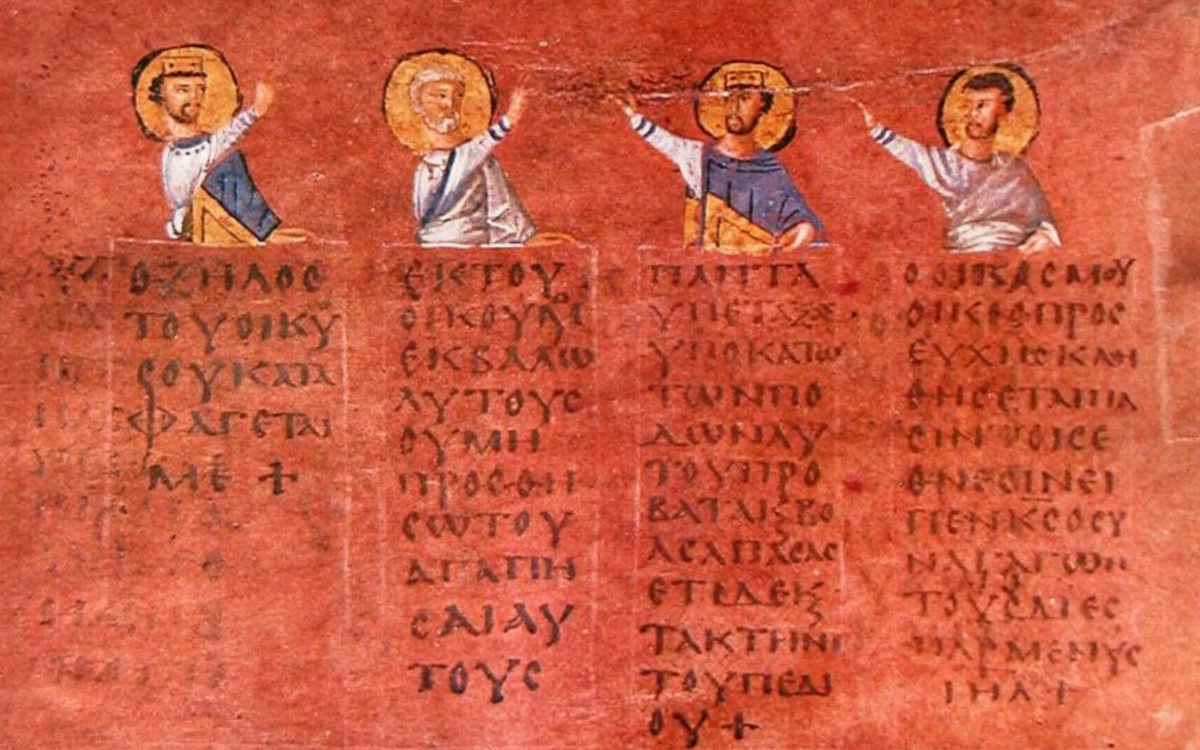
If you have spoken to me recently, it is possible you heard me go on a tangent about early Christianity. About a year ago, I started a deep dive into New Testament studies, inspired by an epiphany I had while listening to a gospel reading in church (a topic for another time). This deep dive led me to two recent books, each of which re-examines some basic assumptions of modern biblical studies: The Origins of Early Christian Literature by Robyn Faith Walsh, and The Grammar of Messianism by Matthew Novenson.
Gospels as works of literature
Robyn Faith Walsh wants scholars to approach the gospels "as we would any other kind of Greco-Roman literature." She has observed a tendency, throughout the history of modern biblical scholarship, to treat the gospels "principally as religious texts" (p. 5). Western academia compartmentalizes "religious/secular, orthodoxy/heresy, and religious studies/classics" (p. 138), so that "religious" texts are not cross-compared with "secular" ones when they should be. Each of the Synoptic gospels, she argues, was "an innovative play on the civic biographical tradition" (p. 170), and yet New Testament scholars rarely consider the gospels in relation to other biographical works of the period.
In the ancient Mediterranean, writers were specialists. Composing a literary work (biographical or otherwise) "required an advanced rhetorical education" (p. 109). For Walsh, reckoning with this fact means reappraising the gospels as works of elite cultural producers. For gospel writers, she says their "most immediate and formative social context" would have been "social networks of fellow writers and literate critics" (p. 84f.).
Walsh's reframing has radical implications for New Testament studies. It is common for scholars in this field to refer to "Marcan," "Matthean," and "Lucan" communities, the idea being that gospel writers were the elected spokespersons of different churches. There is little basis in fact for this view, but commentaries have been filled for centuries trying to outline the particular values and concerns of each gospel community. From the Romantic period, German academics were attracted to the notion of the poet as spokesperson-of-the-people. They treated mythical texts as comprising the experience and worldview of different groups, rather than the decisions of individual authors (see pp. 90-95). This approach, Walsh admonishes, robs biblical authors of their "agency" (101).
Walsh finds a similar trend in postmodern literary criticism. The "death of the author" has occasioned readers to treat texts as social products rather than works of autonomous individuals. She conflates Barthes, Foucault, and Derrida, and describes their philosophy as, "Born of the rejection of subjectivity." She does not unpack this odd phrase, but says these theorists “eradicated the authorial subject from the production of literature” (p. 85). Concerned for authorial agency, Walsh resists the notion that authors are “disembodied or passive filters of broader cultural structures." In a word: "cultures write texts, not authors" (p. 86).
I found this part of the book overstated and under-argued. Behind her critique is a certain notion of what it means to be, a notion based on discursive conventions like subject/object and active/passive, which she does not justify or examine. Why does the idea that "cultures write texts" take agency away from authors? Is an active filter of cultural structures so inconceivable? Perhaps she conceives of it for herself, but she defines it out of postmodern theory, and I think unjustly. Walsh even reflects a Derridean concept when she refers to writing as "innovative play." For Derrida, authors are not automatons deprived of will or consciousness. He describes writing as "supplementarity," characterized as a form of "play." Since no written statement can be fixed into a law for all time, all writing emerges from and contributes to an endless stream of relative supplements. We are always writing, and however much our writing is the product of our choices, it is still also our social context expressing itself through us. These are not mutually exclusive.
Disagreements aside, Walsh has made an excellent case that the Synoptic gospels should be compared to other biographical works of the Greco-Roman world. It remains to be considered what effect this reframing could have on the dating of these texts. She assumes they are first century (see p. 32). While this assumption reflects the scholarly consensus, her own work could challenge this consensus. If these authors were primarily writing to an audience of other authors, we might consider which periods and locales attest to an exchange of gospel literature, or at least acute literary interest in the figure of Jesus. Perhaps the Synoptics were not the original gospel templates, but relative contributions to the contested literary field of the second century, and thus contemporaries of the apocryphal gospels.
One wishes to go back from the supplement to the source: one must recognize that there is a supplement at the source.
- Derrida, Of Grammatology
In part two of this post, I review Matthew Novenson’s new book on the history of the “ancient Jewish political idiom” —the Messiah.
Jack Holloway